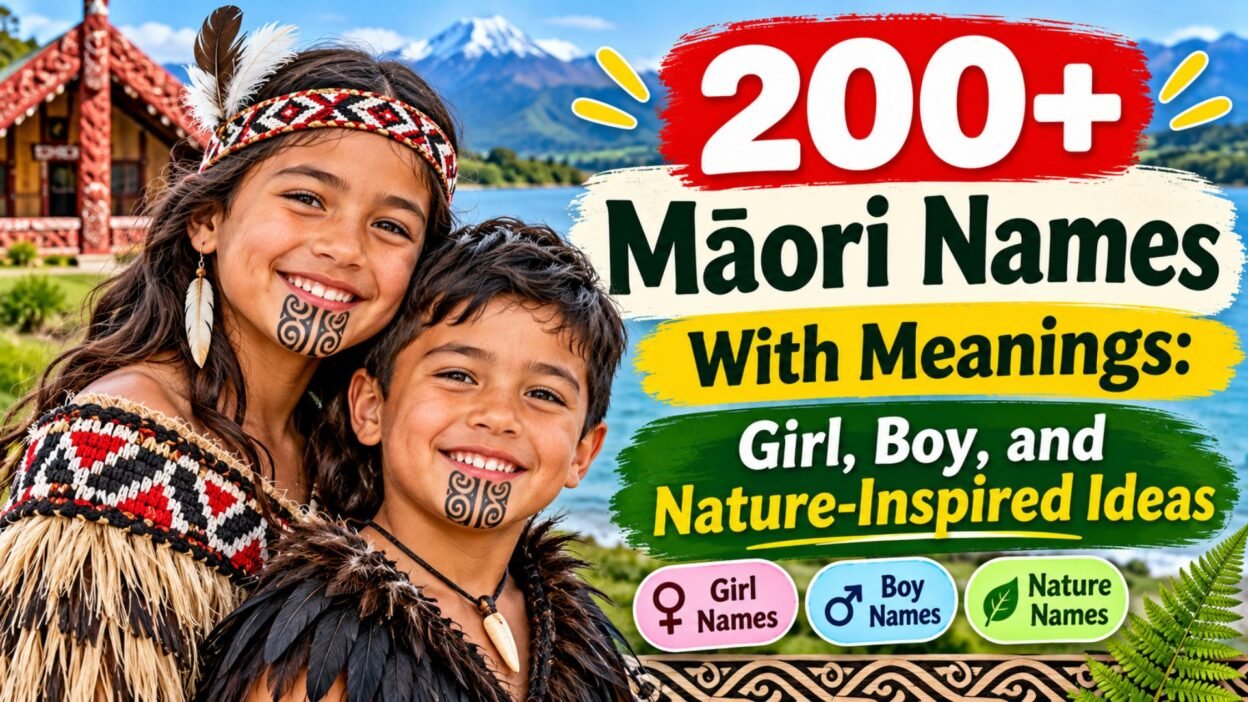
Māori names (often typed as “Maori names” online) are rich in meaning. Many describe a feeling, a landscape, a bird, or an ancestor’s story, so a single word can say a lot about the person who carries it. That depth is why parents, writers, and language learners keep coming back to te reo Māori for inspiration.
This guide groups names by style and gives a short meaning for each one. You will find girl names, boy names, nature-inspired choices, and Māori forms of common English names. Pronunciation notes and a few respectful naming tips follow, because getting a Māori name right matters as much as choosing it.
Why Names Matter in Māori Culture
In Māori culture, a name is more than a label. It often connects a person to whakapapa (genealogy), to a place, or to an event in the family’s story. New Zealand’s Department of Internal Affairs has described names as carrying memories and links back to history and whakapapa.
Families may also gift a name from a relative or an ancestor. As a result, some names belong strongly to a particular whānau (family), hapū (sub-group), or iwi (group). Traditions differ between iwi, so no single rule covers every family.
Meanwhile, te reo Māori names are used well beyond New Zealand. A senior adviser at Te Taura Whiri i te Reo Māori, the Māori Language Commission, has said that non-Māori who choose Māori names can help strengthen links between all New Zealanders through the language.
What Are the Most Popular Māori Names?
Popularity shifts from year to year, but recent results are consistent. Aroha and Ariki stayed the most popular Māori baby names for a third year running in 2025, according to the Department of Internal Affairs list. Officials also check each name’s origins with internal advisers and the kaumātua group Te Atamira Taiwhenua before publishing the list. teaonews
Rankings update annually, so check the Department of Internal Affairs SmartStart website for the latest figures. In the meantime, the sections below mix well-known choices with less common ones.
Māori Girl Names With Meanings
Girl names in te reo often express love, beauty, courage, or peace. Some also come from well-known legends. The choices below suit anyone who wants a name that is soft in sound but strong in meaning.
- Aroha — Love and compassion, and one of the most widely used Māori names.
- Ātaahua — Beautiful, a graceful pick with a gentle sound.
- Maia — Brave or confident, ideal for a determined personality.
- Anahera — Angel, a popular name with a calm, luminous feel.
- Āwhina — To help or assist, a quietly practical name about generosity.
- Hinemoa — The heroine of a famous love story set around Lake Rotorua, who swam to Mokoia Island.
- Pania — A sea maiden from Hawke’s Bay legend, linked to the reef near Napier.
- Hinewai — Combines hine (girl) and wai (water).
- Rangimārie — Peace and calm, a longer name with a soothing rhythm.
- Marama — Moon or light, a bright choice that suits any season.
Māori Boy Names With Meanings
Boy names often highlight leadership, support, and family bonds. Several refer to historical figures, while others describe qualities that parents hope to see in a child.
- Ariki — A chief or high-born leader.
- Manaaki — To nourish, protect, and care for others.
- Manawa — Heart, a short and meaningful option.
- Rewi — A traditional name with several possible meanings, including “leader.”
- Teina — Younger brother, a fitting choice for a second child.
- Te Koha — “The gift,” often chosen for a long-awaited baby.
- Pōtatau — Associated with Pōtatau Te Wherowhero, the first Māori King.
- Tai — Tide or coast, a short name with an ocean feel.
Nature-Inspired Māori Names
Aotearoa’s forests, birds, and coastlines inspire many names. Because these words describe things rather than genders, families often use them for any child. Even so, check how your own whānau or community uses a particular word before deciding.
Names From Birds
Native birds appear in stories, art, and everyday speech. Consequently, bird names feel both familiar and distinctive.
- Tui — A songbird known for its melodic call and white throat tuft.
- Huia — An extinct bird whose tail feathers people of rank once wore.
- Kōtuku — The white heron, a symbol of rarity and grace.
- Pīwakawaka — The fantail, a lively, friendly bird.
- Kererū — The native wood pigeon.
- Kahu — The harrier hawk, though kahu also refers to a cloak.
Names From Trees and Plants
Forest names tend to sound grounded and strong. They also work well in English-speaking settings because the sounds are easy to say.
- Nikau — A native palm with a distinctive, feathery crown.
- Kauri — A towering ancient tree.
- Kōwhai — A tree famous for bright yellow spring flowers.
- Rātā — A native tree known for red blossoms.
- Ngaio — A coastal native tree.
Names From Sea, Sky, and Light
Water and sky run through Māori language and tradition. The following names feel open and spacious.
- Moana — Ocean or sea.
- Wai — Water, a simple and elegant choice.
- Rangi — Sky or heavens.
- Whetū — Star.
- Awatea — Daybreak, suited to a hopeful, fresh feel.
- Kahurangi — Treasured or precious.
Māori Versions of English Names
After European contact, many Māori adopted transliterated versions of biblical and English names. In other words, these names follow Māori sounds while keeping the original meaning. According to one name database, Hone, Wiremu, Tamati, and Rāwiri are Māori forms of John, William, Thomas, and David. namedrop
- Wiremu — The Māori form of William.
- Hēmi — The Māori form of James.
- Rāwiri — The Māori form of David.
- Tamati — The Māori form of Thomas.
- Mikaere — The Māori form of Michael.
- Pāora — The Māori form of Paul.
- Mere — The Māori form of Mary.
- Airini — The Māori form of Irene.
- Hoani — The Māori form of John.
How Māori Names Are Built
Many names are single words, such as Aroha or Moana. Others combine words or begin with Te, which roughly means “the.” Internal Affairs lists include examples like Te Aroha and Te Ariki, so the prefix is a normal part of many registered names.
Be careful about breaking names into parts and guessing a meaning. Te Ara, New Zealand’s online encyclopedia, warns that place names often carry historical or mythological meaning, so translating pieces can mislead. Personal names work similarly, and Rewi, for instance, has more than one accepted meaning.
How to Pronounce Māori Names
Māori pronunciation is regular once you learn the vowels. Each vowel has one main sound, and a macron (the line over a letter, as in ā) marks a long version of that vowel.
VowelApproximate sounda“ah”e“eh”i“ee”o“aw”u“oo”
Two other points help beginners. First, wh is commonly pronounced like an “f” sound, so whakapapa is said roughly as “fuh-kuh-puh-puh”. Second, ng sounds like the end of “singer”.
Macrons matter in writing too. They mark long vowels, which can change both pronunciation and meaning. One man’s story illustrates this: his name Rāhui needs its macron, because the version without it is not a real word in te reo. Therefore, type the macron whenever your keyboard allows. mdcnewshub
Tips for Choosing a Māori Name Respectfully
A thoughtful process protects the meaning of the name and the people connected to it. These steps help:
- Check the meaning in a trusted source such as Te Aka Māori Dictionary.
- Ask a fluent speaker or a cultural adviser if you are unsure.
- Listen to the pronunciation and practice it aloud.
- Write the name with correct macrons.
Beyond these steps, consider a few related points:
- Think about long-term use. The name should work for a child and for an adult.
- Be careful with sacred or ancestral names. Some names connect to atua (deities) or to specific families, so appropriateness varies.
- Learn the story. Names like Hinemoa and Pania come with legends worth knowing.
- Consider your connection. Naming a child in the language of a culture you belong to differs from borrowing a name without context, so reflect on your reasons.
Common Mistakes With Māori Names
- Dropping macrons. This can change how a word sounds and what it means.
- Guessing meanings. Online lists sometimes disagree, so confirm with a reliable source.
- Mispronouncing wh and ng. These sounds differ from standard English patterns.
- Treating all names as interchangeable. Names from legend, history, and nature each carry their own weight.
- Assuming a name is unisex. Check how families actually use it.
Frequently Asked Questions
What are some popular Māori names?
Aroha and Ariki have topped recent Internal Affairs lists. Maia, Nikau, Manaia, and Anahera also appear often in published rankings over the years.
What do Māori names usually mean?
Meanings commonly relate to nature, emotions, ancestors, and valued qualities. For example, Aroha means love, Moana means ocean, and Manaaki means to care for others.
Can non-Māori people use Māori names?
Many people do, and language advisers have said it can help connect communities through te reo. However, it is wise to learn the meaning, pronounce it correctly, and avoid names with restricted or sacred significance.
How do you pronounce Māori names correctly?
Learn the five vowels, pay attention to macrons, and practice the wh and ng sounds. Audio from Māori speakers is the best guide, and the Speak Māori video series is a free starting point.
Why are macrons important in Māori names?
A macron shows a long vowel, which affects pronunciation and sometimes meaning. Official place-name boards in New Zealand have added macrons to hundreds of names for this reason.
Are there Māori names that work for any gender?
Many nature-based words, including Kahurangi, Rangi, Whetū, and Wai, are used for children of any gender. Even so, local and family usage varies.
Where can I find the latest popular Māori baby names?
The Department of Internal Affairs publishes an annual list on its SmartStart website, usually released around Matariki, the Māori New Year.
Conclusion
The best Māori names combine sound, meaning, and respect for the language. Start with a category that suits you, whether that is a legend-based girl name, a leadership-themed boy name, or a bird or tree from the forest. Next, confirm the meaning, practice the pronunciation, and keep the macrons. A name chosen with that care carries its story well.