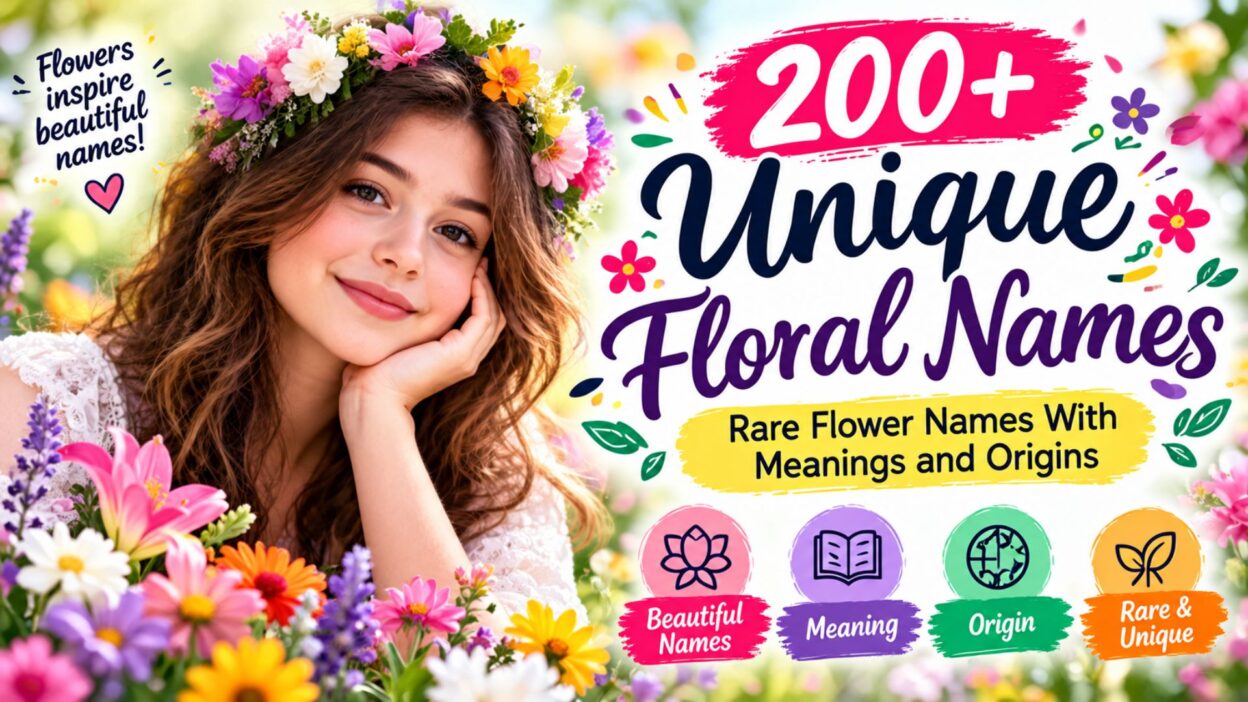
Flower names have never gone out of style, but the most popular ones have become very familiar. Nameberry’s data places Iris, Violet, Daisy, Lily, and Rose at the top of international lists. If you love the idea of a bloom-inspired name without sharing it with half the playground, you need to look further into the garden.
This guide gathers unique floral names that feel fresh, wearable, and well grounded in real meanings. You will find rare botanical picks, names that mean “flower” in other languages, and names that hide a floral origin in plain sight. Plus, there are short options, vintage blooms, unisex choices, and a simple method for building your own combination.
What Makes a Floral Name Unique?
A truly distinctive floral name usually has one of three qualities. It may be rare in birth records, it may come from a language or culture that most English speakers rarely encounter, or it may hide its flower meaning behind an unexpected spelling.
Rarity is easy to check. The US Social Security Administration publishes only names given to at least five babies in a year, so a name missing from its lists is truly uncommon. Even so, a name that is unusual today can climb quickly, which is why it helps to look at trends as well as rankings.
Rare Botanical Names
Botanical names come straight from plant families, species, or the scientists who described them. They suit parents who want a polished, slightly literary sound. Many also carry a story, because several flowers took their names from the naturalists who studied them.
- Amaryllis — A bold name tied to a showy, trumpet-shaped bloom. It also appears as a shepherdess’s name in classical pastoral poetry.
- Camellia — Named for the Jesuit botanist Georg Joseph Kamel, this graceful choice sounds elegant and a little Southern.
- Freesia — A fragrant flower named after the German physician Friedrich Freese. The soft sound makes it feel musical.
- Zinnia — Named for the botanist Johann Gottfried Zinn, it reads as bright, upbeat, and energetic.
- Celandine — A small yellow spring wildflower. Its lyrical, old-English sound feels storybook-ready.
- Cleome — Known as the spider flower, this short name has a light, modern rhythm.
- Nerine — A genus of lily-like flowers whose name has been linked to the sea nymphs of Greek myth.
- Verbena — A herbal, fragrant plant name with a crisp, slightly vintage feel.
- Wisteria — Named for the American physician Caspar Wistar, and dramatic enough for a parent who loves a trailing, romantic bloom.
- Linnea — Based on the twinflower, which honors the botanist Carl Linnaeus. It has long been a charming Scandinavian choice.
Names That Mean “Flower” in Other Languages
Many cultures have their own beautiful words for blossoms. Choosing one of these names can honor heritage or simply bring in a sound that feels less familiar. However, take a moment to learn the correct pronunciation and cultural background first, because respect matters as much as style.
- Leilani — Hawaiian, meaning “heavenly flower.” Lyrical and sunny, it suits a summer baby.
- Bluma — A Yiddish name meaning “flower,” with a warm, vintage character.
- Tiare — Tied to the South Pacific and often connected with the word for flower.
- Xochitl — From Nahuatl, meaning “flower,” and usually pronounced roughly SOH-cheel. It honors Indigenous Mexican heritage.
- Papatya — The Turkish word for daisy, rare and playful.
- Viorica — Derived from the Romanian word for the violet flower.
- Kamala — A Sanskrit name meaning “lotus,” with a spiritual resonance.
- Capucine — The French word for nasturtium, and a fashionable name in France in recent decades, according to Nameberry.
- Anthea — From the Greek word for flower, giving it a classic, mythic polish.
Mythology and Literary Floral Names
Some flower names come with built-in stories. Because they carry a cultural reference, they tend to feel more mature and layered than a simple nature word.
- Chloris — The Greek goddess of flowers. Rare today, it has an ancient, graceful sound.
- Narcissa — Linked to the narcissus, or daffodil. Some people think of the word “narcissist,” so weigh that association before you commit.
- Iolanthe — Meaning “violet flower” in Greek, and the title of an 1882 Gilbert and Sullivan operetta.
Short and Sweet Floral Names
Short names are easy to spell, quick to say, and hard to mispronounce. For that reason, they work well with a long surname or an elaborate middle name.
- Aster — From the Greek word for “star,” named for the star-shaped blooms.
- Calla — Taken from the calla lily, a pure and simple choice.
- Cassia — A plant name with an earthy, spiced feel.
- Posy — A small bouquet of flowers. Sweet and cheerful, it reads as playful.
- Tansy — A yellow herbal wildflower. Cute and unfussy.
- Rue — A single syllable with an herbal heritage and a touch of edge.
Vintage Floral Names With Charm
Old-fashioned flower names feel cozy and familiar yet remain uncommon among today’s newborns. As a result, they suit parents who love a nostalgic sound.
- Marigold — Often explained as “Mary’s gold,” it has a sunny, storybook warmth.
- Primrose — Linked to the Latin for “first rose,” a name that feels like early spring.
- Lavender — Soft, calming, and fragrant, with a slightly bohemian mood.
- Daylily — A rare, cheerful compound name that stands out without feeling forced.
Hidden Floral Names
Here is where things get interesting. Some names mean “flower,” “rose,” or “lily,” but nobody would guess from the spelling. Therefore, they give you the symbolism without the obvious label.
- Marguerite — The French word for daisy, and a graceful, European-feeling option.
- Susannah — Related to the Hebrew word for lily, and available in several variants.
- Rhoda — The Greek word for rose, with a retro, understated tone.
- Jacinta — Related to the hyacinth, with a lively, Spanish and Italian flavor.
Unisex and Boys’ Floral Names
Floral names are not just for girls. A handful of options suit boys or any gender, and they often feel earthy rather than frilly.
- Florian — A Latin-rooted name connected to flowers and long used for boys.
- Briar — A thorny, wild-rose plant name that works for any child.
- Rhodes — A stylish surname-type option related to the Greek word for rose.
How to Create Your Own Floral Name
If none of these fits exactly, try building your own. A formula keeps the result natural rather than random.
- Flower first name + vintage middle name: Clover Eleanor, which balances a breezy start with a classic finish.
- Flower middle name + traditional first name: Josephine Lilac, which keeps the floral touch private and unexpected.
- Two flowers, one gentle name: Yarrow Rose, which pairs a wild herb with a timeless bloom.
- Surname-style plant + short first name: Larkspur Jane, for a lyrical contrast between long and short.
In every case, say the combination aloud. A flowing rhythm matters more than a clever concept.
How to Choose a Floral Name You Will Love Long-Term
Unusual names deserve a little extra thought. A few checks can save frustration later.
- Test pronunciation. Ask several people to read the name aloud. If most guess wrong, expect to correct people often.
- Check the spelling. Names with unusual letter patterns may be misspelled on forms and certificates.
- Search for associations. Look up the name in other languages and on a few search engines, because some words carry surprising meanings.
- Consider age. A frilly name may delight a toddler yet feel overly decorative for an adult. A name that includes a formal option or a nickname offers flexibility.
- Weigh the plant. A few flowers are poisonous or have difficult reputations. A name remains only a name, but learning the plant’s story keeps you informed.
Frequently Asked Questions
What are some unique floral names?
Rare examples include Amaryllis, Celandine, Cleome, and Nerine. Names that mean flower in other languages, such as Leilani and Xochitl, also feel distinctive.
What is the rarest flower name?
No single name holds that title, since rarity changes with each country and year. Checking national birth records will show how often a name appears.
Are floral names only for girls?
No. Names like Florian, Briar, and Pema work for boys or any gender, although most flower names do lean feminine.
Can I honor a culture with a floral name?
Yes, but learn the meaning, pronunciation, and cultural context first. If the name comes from your own heritage, it can be a meaningful connection.
What are good middle names for a floral first name?
Short, classic middle names balance an ornate first name best. If the first name is brief, a longer middle name can add rhythm.
How do I find a floral name that is not too popular?
Compare your favorites against current birth data and baby-name sites, then choose from the less common end of the list. Hidden floral names and botanical names are good places to start.
Conclusion
Unique floral names give you plenty of room to be creative. You can choose a rare botanical name, a global word for flower, a vintage bloom, or a hidden floral meaning, and each carries its own story.
Start with the sound and style you love, then check pronunciation, spelling, and meaning. Say your top few aloud with your surname, and the right choice will usually stand out.