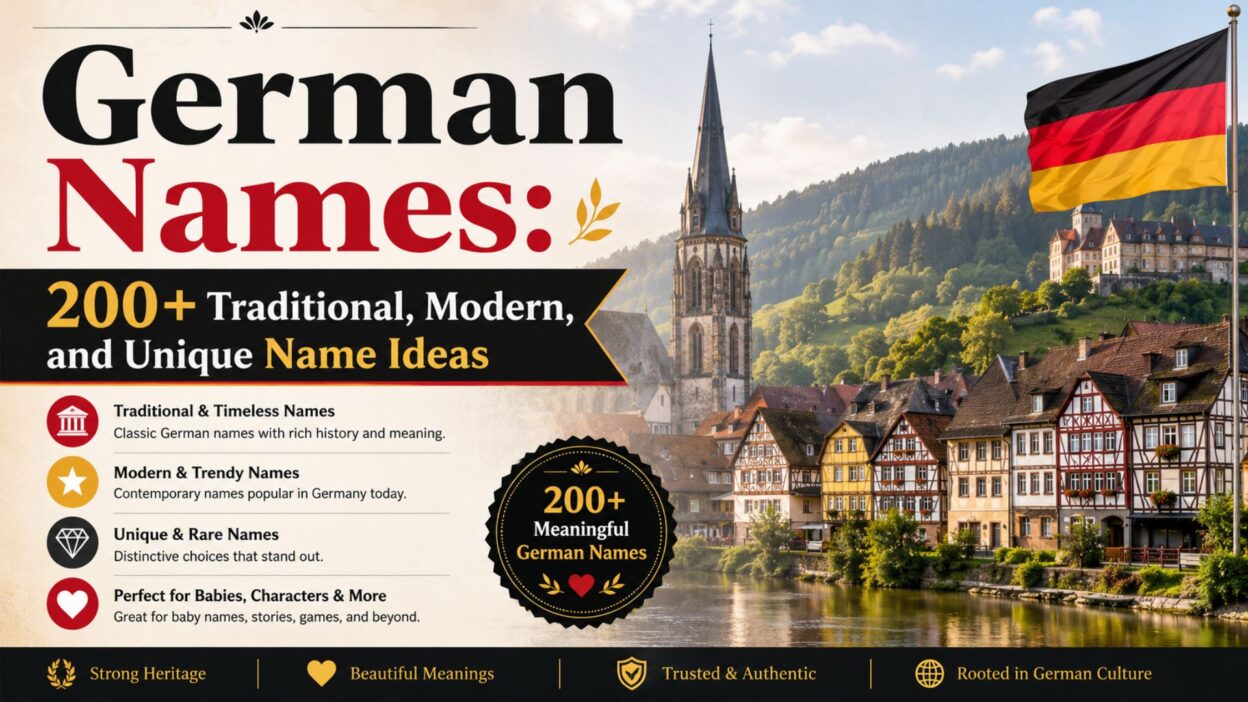
German names offer a fascinating mix of old-world tradition, strong meanings, elegant sounds, and modern simplicity. Some come directly from Old High German and Germanic roots, while others became firmly established in German-speaking communities through Latin, Greek, Hebrew, Scandinavian, and neighboring European traditions.
That variety makes German names useful for many different purposes. You might be choosing a baby name, creating a character, exploring family heritage, or simply searching for a name with a distinctive European feel. Traditional choices such as Friedrich and Adelheid sit comfortably beside shorter favorites such as Emma, Lena, Felix, and Paul. Current German naming trends also show a strong preference for familiar, international names alongside classic choices.
Below, you’ll find a carefully selected collection of German names organized by style, gender, meaning, and overall feel. The goal is not just to give you a long list, but to make it easier to find a name that genuinely fits.
Best German Names
If you want a name that feels recognizably German without sounding difficult or overly old-fashioned, start with these versatile choices. They work particularly well for babies, characters, and family-inspired naming.
- Emma — A timeless choice associated with the Germanic element ermen, meaning whole or universal.
- Friedrich — A distinguished traditional name associated with peace and rulership.
- Lena — A short, graceful choice widely used in German-speaking regions.
- Felix — A cheerful classic meaning happy or fortunate.
- Anna — A familiar international name with a long history in German-speaking communities.
- Paul — A simple classic meaning small or humble.
- Heidi — A charming German diminutive associated with Adelheid.
- Maximilian — A formal, impressive name with a distinctly traditional character.
- Clara — An elegant name associated with brightness and clarity.
- Karl — A compact classic traditionally connected with the idea of a free man.
- Matilda — A strong feminine name associated with battle and strength.
- Leon — A modern favorite associated with the lion.
- Greta — A stylish short form of Margareta, traditionally associated with the pearl.
- Wilhelm — A historic German name connected with will and protection.
- Sophie — A graceful name associated with wisdom.
- Otto — A short historic name traditionally connected with wealth or prosperity.
- Charlotte — A polished classic with Germanic roots through Charles.
- Emil — A friendly, traditional choice that also feels contemporary.
- Luisa — An elegant feminine form associated with famous warrior traditions.
- Johann — A classic German form of John with a strong historical presence.
German Boy Names
German boy names range from compact modern choices to long traditional names built from ancient Germanic elements. Many older Germanic names combine ideas such as strength, protection, peace, courage, and leadership.
Traditional German Boy Names
These choices have an unmistakably classic character. They are especially suitable if you want a name that connects with German history and older naming traditions.
- Friedrich — Peaceful ruler.
- Wilhelm — Traditionally associated with will and protection.
- Heinrich — A historic name connected with the idea of ruling the home.
- Johann — A traditional German form of John.
- Georg — A classic European name associated with the farmer or earthworker.
- Gustav — A distinguished traditional name with Scandinavian and German usage.
- Hermann — Historically associated with an army or warrior.
- Konrad — Associated with brave or bold counsel.
- Albrecht — Connected with noble and bright qualities.
- Bernhard — Built from Germanic elements associated with a bear and strength.
- Wolfgang — A famous traditional German name associated with wolf and path.
- Ludwig — Connected with fame and battle.
- Ferdinand — A historic European name with Germanic roots associated with peace and courage.
- Gerhard — Traditionally associated with spear and strength.
- Dietrich — A historic name connected with the people and ruler.
- Eberhard — Associated with a wild boar and bravery.
- Rudolf — Connected with the elements meaning fame and wolf.
- Werner — A traditional Germanic name associated with protection and the army.
- Ernst — A straightforward name meaning serious or earnest.
- Walter — Traditionally associated with ruling and the army.
Modern German Boy Names
Modern German naming does not consist only of ancient names. Short, internationally recognizable choices are especially visible in contemporary German naming lists. Recent German baby-name coverage includes choices such as Noah, Matteo, Theo, Leo, Emil, Leon, Elias, Paul, Luca, and Henry among current favorites.
- Noah — A soft, internationally familiar biblical choice.
- Theo — Short, friendly, and energetic.
- Leo — Compact and confident, with a strong lion association.
- Emil — Traditional enough to feel established while remaining youthful.
- Leon — A polished modern choice with a powerful animal association.
- Elias — A biblical name with an elegant sound.
- Luca — Short, approachable, and widely recognized across Europe.
- Henry — International in feel while closely related to traditional Heinrich.
- Finn — Brief and lively with broad European appeal.
- Ben — Simple, familiar, and easy to pronounce.
- Jonas — A warm biblical choice common across Europe.
- Max — A compact form associated with Maximilian or Maximus.
- Felix — Cheerful and classic.
- Paul — Simple, understated, and enduring.
- Anton — A refined traditional name that still feels current.
- Moritz — A distinctly German-speaking choice with a sophisticated sound.
- Oskar — Vintage in character but increasingly fresh again.
- Bruno — Strong, compact, and memorable.
- Niklas — A German form related to Nicholas.
- Lukas — A familiar German spelling of Lucas.
German Girl Names
German girl names cover a broad spectrum, from traditional names such as Adelheid and Gisela to modern favorites such as Emma, Emilia, Mia, and Lena. Many names used in Germany have international roots, so a name does not need to originate in Germany to be established as part of German naming culture.
Traditional German Girl Names
Choose from this group if you want an elegant, historical, or distinctly old-world feeling.
- Adelheid — A historic Germanic name associated with nobility.
- Gisela — An Old High German name traditionally connected with a pledge or promise.
- Hildegard — A strong historical name associated with battle and protection.
- Gertrud — A traditional Germanic name linked with strength and spear.
- Ursula — A classic name traditionally associated with a little bear.
- Ingrid — A graceful Scandinavian name long established in German usage.
- Hannelore — A distinctive traditional combination with an unmistakably vintage character.
- Elisabeth — A long-established biblical name used throughout German-speaking Europe.
- Margarete — A German form of Margaret, associated with the pearl.
- Brigitte — A familiar European classic with a polished sound.
- Roswitha — A rare historical Germanic choice with a strong traditional feel.
- Irmgard — An old Germanic name associated with protection.
- Waltraud — A traditional Germanic combination connected with rule and strength.
- Friederike — The feminine form related to Friedrich.
- Wilhelmine — A feminine form related to Wilhelm.
- Auguste — A formal vintage choice with a dignified sound.
- Theodora — An elegant name with the meaning gift of God.
- Dorothea — A classic name meaning gift of God.
- Anneliese — A German combination of Anne and Liese.
- Heiderose — A German combination of Heide and Rose.
Modern German Girl Names
Current German naming trends favor names that are familiar, easy to pronounce, and often usable internationally. Recent sources highlight choices such as Emma, Mia, Hannah, Emilia, Sofia, Lena, and Anna among prominent contemporary options.
- Emma — Short, elegant, and deeply established.
- Mia — Modern, soft, and easy to remember.
- Hannah — A graceful biblical name associated with grace.
- Emilia — Elegant and feminine with a polished European feel.
- Sofia — Associated with wisdom and widely recognized internationally.
- Lena — Short and versatile with strong German-speaking usage.
- Anna — A timeless classic that works across generations.
- Leonie — A bright, feminine choice related to the lion.
- Mila — Compact, modern, and gentle.
- Laura — Familiar and easy to pronounce in many languages.
- Marie — A classic form of Maria with strong European appeal.
- Lina — Short, delicate, and versatile.
- Ella — Simple and stylish.
- Clara — Refined and associated with brightness.
- Luisa — Elegant and distinctly European.
- Amelie — Soft and fashionable with established German usage.
- Johanna — A traditional biblical choice that remains contemporary.
- Greta — Vintage, compact, and memorable.
- Sofie — A German spelling variant associated with wisdom.
- Lotte — A charming short form related to Charlotte.
German Names With Strong Meanings
Meaning can make a name feel more personal. Germanic naming traditions are especially interesting because many older names were constructed from meaningful elements. Common elements included ideas such as wil for will, helm for protection or helmet, frid for peace, and hard for strength or bravery.
Names Connected With Strength
- Bernhard — Associated with bear-like strength and bravery.
- Eberhard — Connected with the wild boar and courage.
- Gerhard — Traditionally linked with spear and strength.
- Hildegard — Associated with battle and protection.
- Matilda — Connected with strength in battle.
- Alaric — A Germanic-rooted name traditionally associated with all-ruler.
- Richard — Associated with power and bravery.
- Leopold — Traditionally linked with boldness and people.
- Erhard — Associated with honor or strength.
- Friedhelm — Combines ideas associated with peace and protection.
Names Connected With Nobility
- Adelheid — Associated with noble qualities.
- Adela — A short form related to Germanic noble-name elements.
- Albrecht — Connected with noble and bright qualities.
- Albert — A widely used form associated with noble and bright.
- Alda — Related to Germanic elements associated with old or noble qualities.
- Alwin — Traditionally associated with noble friend.
- Adelina — A feminine name built around the Germanic element adal, meaning noble.
- Adelina — A softer, feminine choice connected to the same noble root.
Cute German Names
Not every German name needs to sound formal. Short forms and diminutives can create a softer, friendlier impression.
- Heidi — Cheerful and instantly recognizable.
- Leni — A sweet short form with a light sound.
- Lotte — Charming and compact.
- Fritzi — Playful and traditionally German-speaking in character.
- Mimi — Cute and easy to use as a nickname.
- Hansi — A friendly diminutive related to Hans.
- Anni — A warm short form of Anna.
- Emmi — A cheerful form related to Emma or Emil.
- Gustl — A traditional nickname associated with Gustav.
- Fritz — A lively short form of Friedrich.
- Klara — A bright, gentle choice.
- Elsa — A graceful short form related to Elisabeth.
- Mina — Compact and feminine, with several possible naming traditions.
- Nele — A short German-speaking choice with a friendly sound.
- Toni — An approachable short form associated with Anton or Antonia.
Cool German Names
For a character, username, creative project, or distinctive baby name, these options have a confident sound without relying on invented combinations.
- Fritz — Short, energetic, and unmistakably traditional.
- Otto — Bold because of its simplicity.
- Bruno — Strong, compact, and memorable.
- Klaus — A classic German form of Nicholas.
- Axel — Crisp and energetic.
- Rolf — Short and distinctly old-school.
- Max — Minimal and confident.
- Moritz — Sophisticated with a distinctly German-speaking feel.
- Anselm — Rare and scholarly in character.
- Lutz — Very short and distinctly German.
- Wolf — Direct, powerful, and rooted in Germanic naming tradition.
- Heinz — A traditional short form related to Heinrich.
- Kurt — Compact and vintage.
- Armin — A historic choice with a strong sound.
- Rainer — Refined and traditional.
Unique German Names
If common choices feel too familiar, consider a less frequently encountered traditional or German-used name. Rare does not have to mean invented. Several authentic German names are unusual today while retaining clear linguistic or cultural roots. Behind the Name, for example, lists names such as Frauke, Annerose, Heiderose, and Jolanthe among German-used names.
- Frauke — A distinctly German feminine name with a soft but unusual sound.
- Annerose — A German combination of Anne and Rose.
- Heiderose — A floral combination with a traditional German feel.
- Jolanthe — An uncommon, elegant German-used choice.
- Gerhild — An old Germanic name associated with spear and battle.
- Roswitha — Rare and strongly historical in character.
- Irmgard — A distinctive traditional Germanic choice.
- Waltraud — An unmistakably vintage option.
- Wiltrud — A rare traditional Germanic name.
- Almut — A concise old Germanic choice.
- Anselma — An uncommon feminine form related to Anselm.
- Aloysia — A rare German feminine form of Aloysius.
- Hedwig — A historic name associated with battle.
- Ottilie — Elegant, vintage, and relatively distinctive.
- Mechthild — A strongly traditional Germanic choice.
Short German Names
Short names are easy to spell, remember, and say. They can also give traditional names a modern appearance.
- Ada — Elegant and compact.
- Eva — Simple, familiar, and timeless.
- Ida — A short vintage favorite.
- Mia — Modern and internationally recognizable.
- Lena — Soft and versatile.
- Leni — Friendly and informal.
- Nele — Light and distinctly German-speaking in feel.
- Emma — Short but historically substantial.
- Elsa — Graceful and recognizable.
- Lotte — Playful and charming.
- Max — Strong and minimal.
- Otto — Historic and memorable.
- Hans — A classic short form of Johannes.
- Kurt — Crisp and traditional.
- Fritz — Energetic and familiar.
- Wolf — Powerful and direct.
- Lutz — Very concise and distinctive.
- Paul — Simple and enduring.
- Theo — Modern and approachable.
- Emil — Traditional without feeling heavy.
German Names Inspired by Nature
Nature-related names can give a traditional name a softer or more symbolic quality. Some are direct nature words, while others have meanings or associations connected to animals, flowers, or landscapes.
- Wolf — A direct animal-inspired choice.
- Adolf — Historically derived from a Germanic name meaning noble wolf, although its modern associations make it unsuitable for many naming contexts.
- Bernhard — Associated with a bear and bravery.
- Lorelei — Connected with the famous Rhine rock and its associated German legend.
- Heide — A German name connected with heathland.
- Rosemarie — A floral combination with a gentle vintage quality.
- Rosalie — A romantic floral choice.
- Linde — Connected with the linden tree.
- Hedda — A short, traditional choice with a strong historical feel.
- Falk — Associated with the falcon.
- Wolfram — A Germanic name associated with wolf and raven.
- Silke — A traditional German feminine name with a light sound.
German Names for Characters
German names can add instant context to a fictional character. A historical character may benefit from a traditional name such as Friedrich or Wilhelmine, while a contemporary character could have a shorter choice such as Jonas or Lena.
For Strong Characters
- Friedrich — Suits a disciplined leader or thoughtful authority figure.
- Wilhelm — Works well for a formal, commanding character.
- Konrad — Has a serious, dependable quality.
- Bernhard — Fits a powerful or protective personality.
- Hildegard — Strong enough for a determined historical character.
- Matilda — A good fit for a courageous heroine.
- Gerhard — Has a rugged traditional character.
- Leopold — Works for a noble or aristocratic personality.
For Gentle Characters
- Lena — Simple and warm.
- Clara — Elegant and calm.
- Emil — Friendly without sounding childish.
- Anna — Familiar and approachable.
- Heidi — Cheerful and affectionate.
- Sophie — Refined and intelligent in tone.
- Johanna — Traditional but graceful.
- Felix — Naturally suited to an upbeat personality.
German Names for Twins
Twin names do not need to rhyme. In fact, choosing names with a shared cultural background but different sounds usually makes them easier to distinguish.
Boy and Girl Pairings
- Friedrich & Clara — A formal classic pairing.
- Emil & Leni — Short, warm, and friendly.
- Felix & Sophie — Familiar and balanced.
- Leon & Lena — Similar enough to feel connected without being identical.
- Paul & Anna — Simple, timeless choices.
- Theo & Emma — Modern and easy to pronounce.
- Johann & Johanna — A deliberately connected traditional pair.
- Max & Greta — Compact names with plenty of personality.
- Lukas & Marie — Familiar European choices.
- Otto & Elsa — Vintage names with strong character.
German Names by Style
Sometimes the fastest way to choose a name is to decide on the overall feeling first.
Elegant German Names
- Adelheid
- Charlotte
- Clara
- Dorothea
- Elisabeth
- Friederike
- Johanna
- Margarete
- Wilhelmine
- Theodora
Strong German Names
- Friedrich
- Wilhelm
- Bernhard
- Konrad
- Gerhard
- Hermann
- Albrecht
- Eberhard
- Matilda
- Hildegard
Vintage German Names
- Otto
- Fritz
- Kurt
- Heinz
- Gustav
- Elsa
- Greta
- Hannelore
- Roswitha
- Ottilie
Modern German Names
- Theo
- Leo
- Emil
- Noah
- Leon
- Luca
- Finn
- Mia
- Emma
- Emilia
German Names With a Classic Old-World Feel
Older Germanic names often have a distinctive rhythm because many were formed by combining meaningful elements. This tradition produced names associated with peace, battle, protection, fame, nobility, and leadership.
- Adalbert — Noble and bright.
- Adalwin — Associated with noble friendship.
- Alarich — A traditional Germanic form associated with ruling all.
- Bernhard — Bear and brave.
- Eberhard — Wild boar and brave.
- Friedhelm — Peace and protection.
- Friedrich — Peaceful ruler.
- Gerhard — Spear and brave.
- Gottfried — God and peace.
- Heinrich — Ruler of the home.
- Ludwig — Fame and battle.
- Manfred — Associated with peace and strength.
- Reinhard — Traditionally linked with counsel and strength.
- Siegfried — Associated with victory and peace.
- Wilhelm — Will and protection.
How to Choose the Right German Name
A meaningful name should fit the person or character who will carry it. Start with the style you naturally prefer, then narrow your choices by sound, meaning, and practicality.
Consider the pronunciation
A beautiful name can become frustrating if people constantly struggle to say it. If the name will be used internationally, check how it sounds in both German and the language spoken by your family or audience.
Decide whether you want German origin or German usage
These are not always the same thing. Some names commonly used in Germany originated in Hebrew, Greek, Latin, Scandinavian, or other languages. German naming culture includes many such names alongside names with Germanic roots.
For example, Hannah has Hebrew roots, while Friedrich has Germanic roots. Both can naturally belong in a collection of names used in Germany.
Think about the full name
Say the first name together with the surname. Listen for repeated sounds, awkward endings, and overly long combinations. A short surname may pair beautifully with a longer first name such as Maximilian, while a lengthy surname may work better with Emil, Max, or Lena.
Choose meaning carefully
Meaning can be a wonderful deciding factor, but etymologies sometimes have several interpretations. When two sources disagree slightly, focus on the established linguistic root rather than choosing the most dramatic interpretation.
Check cultural context
A name can have a beautiful historical origin but also carry modern associations. For example, Adolf is historically Germanic and originally meant “noble wolf,” but its association with Adolf Hitler has profoundly affected its modern use.
That distinction matters when choosing a name for a real person.
German Names FAQs
What are some popular German names?
Current German naming trends include names such as Emma, Mia, Hannah, Emilia, Sofia, Lena, Anna, Noah, Matteo, Theo, Leo, Emil, Leon, Elias, Paul, Luca, and Henry. Popularity changes over time, so a current ranking should be checked against the latest German naming data rather than an old list.
What are traditional German names?
Traditional choices include Friedrich, Wilhelm, Heinrich, Johann, Konrad, Wolfgang, Adelheid, Gisela, Hildegard, Ursula, Margarete, and Friederike. Many older Germanic names were formed from meaningful elements associated with strength, peace, protection, fame, or leadership.
Are all German names originally German?
No. Germany uses many names with origins outside Germany. Biblical, Latin, Greek, Scandinavian, and other European names have become established in German-speaking communities. Therefore, “German name” can refer either to a name of Germanic origin or to a name traditionally used in Germany, depending on the context.
What are some rare German names?
Less common choices include Frauke, Annerose, Heiderose, Jolanthe, Gerhild, Roswitha, Irmgard, Waltraud, Wiltrud, and Mechthild. These names have a more distinctive historical character than many of today’s short international favorites.
What are some short German names?
Good short options include Max, Otto, Fritz, Hans, Kurt, Wolf, Lutz, Paul, Theo, Emil, Emma, Mia, Lena, Leni, Ida, Eva, Elsa, and Lotte. Short names can be especially practical when paired with a long surname.
What German names have strong meanings?
Friedrich is associated with peaceful rulership, Bernhard with bravery, Wilhelm with protection, Gerhard with strength, Matilda with battle strength, and Adelheid with noble qualities. Germanic naming traditions contain many names built around powerful concepts such as peace, courage, protection, fame, and leadership.
What should I consider when choosing a German baby name?
Consider pronunciation, spelling, cultural background, meaning, surname compatibility, and how the name will sound at different ages. If the child will live in Germany, it is also worth checking current naming requirements and discussing unusual choices with the relevant civil registration office. German first-name registration is handled through the Standesamt, and unusual cases can receive additional review.
Are German names good for fictional characters?
Absolutely. Traditional names such as Friedrich, Wilhelm, Hildegard, and Konrad can establish a historical or formal atmosphere, while choices such as Lena, Emil, Theo, and Felix feel more contemporary. Matching the name to the character’s age, setting, personality, and historical period will make the choice feel more believable.
Conclusion
German names offer far more variety than a simple collection of traditional European names might suggest. You can choose a powerful Germanic name such as Friedrich or Bernhard, a graceful classic such as Clara or Adelheid, or a modern favorite such as Emma, Emil, Theo, or Lena.
The best choice depends on what you want the name to communicate. Consider its meaning, pronunciation, cultural background, and relationship with the surname. If you are naming a fictional character, also think about the period and personality. With that approach, you can find a German name that feels distinctive, natural, and genuinely meaningful.