
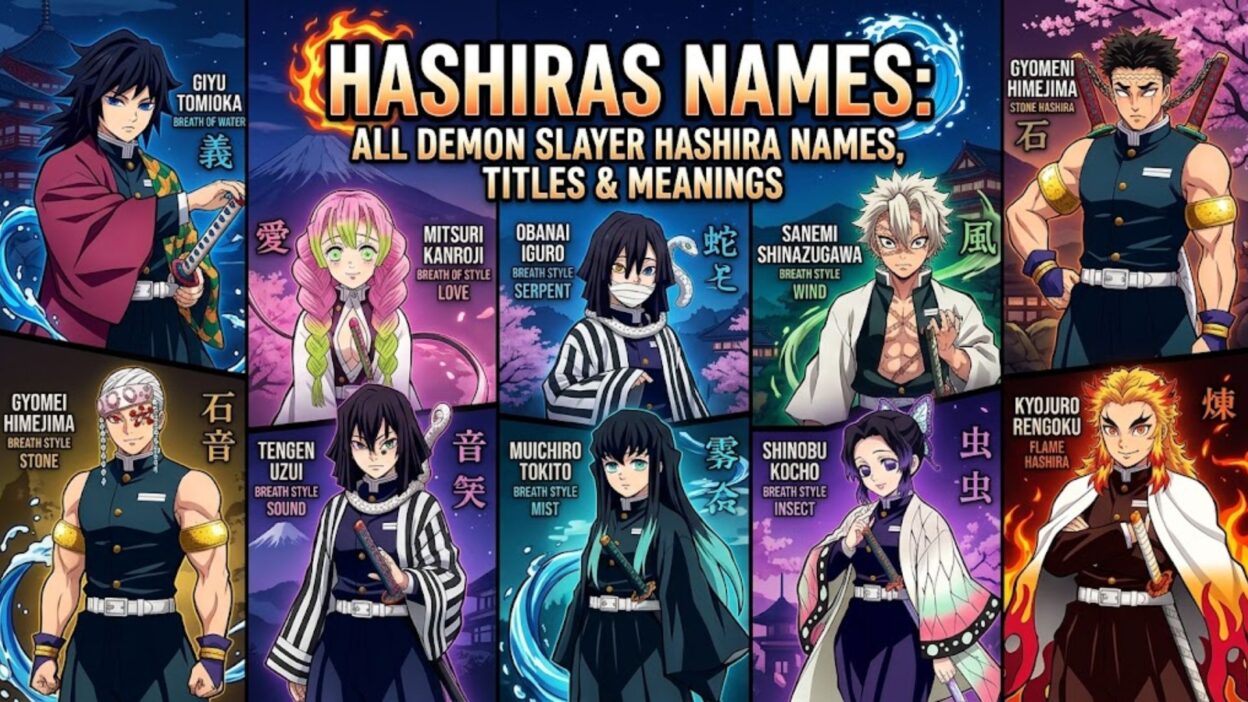
If you are searching for hashiras names, the term usually refers to the elite swordsmen known as the Hashira in Demon Slayer: Kimetsu no Yaiba. The main story introduces nine prominent Hashira, and each one has a distinct name, personality, title, and Breathing Style. The official Demon Slayer character page identifies Giyu Tomioka as the Water Hashira, Shinobu Kocho as the Insect Hashira, Tengen Uzui as the former Sound Hashira, and the other major Hashira by their respective titles.
Below, you will find the main Hashira names, their titles, what makes each character distinctive, and useful context about their Japanese names. Because Japanese names can carry several layers of meaning depending on the kanji, literal character meanings should not always be treated as an official explanation of a character’s name. The goal is to give you a clear, reliable reference while also providing inspiration if you want a Demon Slayer-inspired name for a character, username, or fan project.
All Hashiras Names in Demon Slayer
The nine main Hashira associated with Tanjiro’s generation are Giyu Tomioka, Kyojuro Rengoku, Shinobu Kocho, Tengen Uzui, Mitsuri Kanroji, Muichiro Tokito, Obanai Iguro, Sanemi Shinazugawa, and Gyomei Himejima. Current official character information also describes Tengen as the former Sound Hashira because he retired from active Hashira duty.
- Giyu Tomioka — Water Hashira
- Kyojuro Rengoku — Flame Hashira
- Shinobu Kocho — Insect Hashira
- Tengen Uzui — Sound Hashira
- Mitsuri Kanroji — Love Hashira
- Muichiro Tokito — Mist Hashira
- Obanai Iguro — Serpent Hashira
- Sanemi Shinazugawa — Wind Hashira
- Gyomei Himejima — Stone Hashira
These characters are not simply grouped together because they are powerful. Each represents a different combat specialty and personality, which is one reason the Hashira names are so recognizable among anime fans.
Giyu Tomioka — Water Hashira
Giyu Tomioka is the Water Hashira and one of the first major Hashira characters encountered in Demon Slayer. The official character profile describes him as a reticent swordsman who leads Tanjiro toward the Demon Slayer Corps.
His name has a calm, serious sound that suits his reserved personality. The character’s association with Water Breathing also gives the full name a composed and flowing impression.
- Name: Giyu Tomioka
- Title: Water Hashira
- Breathing Style: Water Breathing
- Personality: Quiet, serious, compassionate
- Name style: Traditional and restrained
For a character name inspired by Giyu, choose something short and dignified rather than overly dramatic. A calm surname paired with a strong given name can create a similar feeling.
Kyojuro Rengoku — Flame Hashira
Kyojuro Rengoku is the Flame Hashira and one of the most recognizable Hashira names in the series. His name has an especially strong connection to fire imagery because Rengoku (煉獄) is a Japanese word associated with purgatory. Sources discussing the kanji also note that the individual characters carry meanings connected with refining or working through fire and imprisonment.
The contrast between his energetic personality and his powerful title makes Kyojuro’s name memorable. His family name also gives the character a dramatic, distinctive identity.
- Name: Kyojuro Rengoku
- Title: Flame Hashira
- Breathing Style: Flame Breathing
- Personality: Energetic, confident, honorable
- Name style: Bold and dramatic
If you want a similar naming style for an original character, combine a traditional-sounding Japanese given name with a surname that evokes fire, nature, or another strong theme.
Shinobu Kocho — Insect Hashira
Shinobu Kocho is the Insect Hashira. The official character profile highlights her knowledge of medicine and her specialized poison-based fighting method.
Her surname, Kocho (胡蝶), contains the kanji 蝶, which means butterfly. That imagery fits her visual identity and Insect Breathing theme particularly well. However, the meaning of a Japanese name should not automatically be reduced to a direct character-by-character translation.
- Name: Shinobu Kocho
- Title: Insect Hashira
- Breathing Style: Insect Breathing
- Personality: Polite, intelligent, composed
- Name style: Delicate but distinctive
Shinobu’s name is a good example of how a character can have a gentle-sounding name while still representing a powerful and determined personality.
Tengen Uzui — Sound Hashira
Tengen Uzui is the Sound Hashira. He later retires from active Hashira service, and the official character page specifically identifies him as the former Sound Hashira.
Tengen’s name stands out because both the given name and surname have an unusual rhythm. His flamboyant personality also makes the name feel larger than life.
- Name: Tengen Uzui
- Title: Sound Hashira
- Breathing Style: Sound Breathing
- Personality: Flashy, confident, energetic
- Name style: Unusual and memorable
The name Tengen is also discussed in Japanese name references through its kanji, 天元, which can carry ideas such as the origin or center of the heavens.
For an original character, a name with unusual sounds and a strong visual theme can create a similarly striking impression.
Mitsuri Kanroji — Love Hashira
Mitsuri Kanroji is the Love Hashira. The official character profile describes her as bright and cheerful while also emphasizing her extraordinary physical strength.
Her name has a softer sound than several of the other Hashira names. Some kanji-based explanations connect Mitsuri (蜜璃) with ideas such as honey and crystal or glass, while parts of Kanroji (甘露寺) carry meanings associated with sweetness, dew, and a Buddhist temple. These are useful literal observations about the written characters, but they should not be presented as a single confirmed creator statement about why the name was chosen.
- Name: Mitsuri Kanroji
- Title: Love Hashira
- Breathing Style: Love Breathing
- Personality: Cheerful, affectionate, enthusiastic
- Name style: Soft and elegant
Mitsuri’s name works well as inspiration for characters who need a warm, friendly, or romantic aesthetic without using an overly complicated name.
Muichiro Tokito — Mist Hashira
Muichiro Tokito is the Mist Hashira and one of the most naturally gifted swordsmen among the Hashira. The official character page describes him as a genius who reaches Hashira rank only two months after beginning training.
His name has a light, airy sound that fits the Mist theme. The combination of a short given name and a compact surname also makes it easy for fans to remember.
- Name: Muichiro Tokito
- Title: Mist Hashira
- Breathing Style: Mist Breathing
- Personality: Detached, talented, observant
- Name style: Soft and mysterious
If you are creating a character inspired by the Mist Hashira, consider names with quiet sounds, natural imagery, or a slightly mysterious feeling.
Obanai Iguro — Serpent Hashira
Obanai Iguro is the Serpent Hashira. The official character profile identifies him by his distinctive bandages and his snake companion, reinforcing the serpent theme surrounding the character.
Among the Hashira names, Obanai Iguro has a particularly sharp and unusual sound. That makes it a strong example of how uncommon syllable combinations can make a fictional character instantly recognizable.
- Name: Obanai Iguro
- Title: Serpent Hashira
- Breathing Style: Serpent Breathing
- Personality: Strict, intense, devoted
- Name style: Uncommon and distinctive
A similar original name could use a less familiar given name with a concise surname. However, avoid copying the exact structure too closely if you are naming an original character.
Sanemi Shinazugawa — Wind Hashira
Sanemi Shinazugawa is the Wind Hashira. The official profile describes him as particularly hostile toward demons, giving him a more aggressive presence than several of the other Hashira.
His full name has a forceful rhythm, which suits his intense personality. The surname Shinazugawa is also immediately recognizable because of its length and distinctive sound.
- Name: Sanemi Shinazugawa
- Title: Wind Hashira
- Breathing Style: Wind Breathing
- Personality: Fierce, impatient, determined
- Name style: Strong and memorable
Sanemi’s name is useful inspiration if you want a character name that feels energetic and serious without relying on an obvious fantasy word.
Gyomei Himejima — Stone Hashira
Gyomei Himejima is the Stone Hashira and one of the senior figures among the main Hashira. The official character profile emphasizes his compassion and spiritual nature alongside his strength.
His name sounds solemn and distinctive. The given name Gyomei is written 行冥, and Japanese name references have interpreted its characters through ideas connected with journeying or conduct and darkness. Such kanji explanations should be treated as literal character meanings rather than a definitive statement about the author’s intended symbolism.
- Name: Gyomei Himejima
- Title: Stone Hashira
- Breathing Style: Stone Breathing
- Personality: Compassionate, serious, spiritual
- Name style: Traditional and imposing
Gyomei’s name works particularly well as inspiration for a mature, dignified fictional character.
Hashira Names and Their Breathing Styles
One of the easiest ways to understand the main Hashira is to connect each name with the title and Breathing Style associated with the character. The official character material confirms the Hashira titles, while current reference sources list their corresponding Breathing Styles.
- Giyu Tomioka — Water Hashira — Water Breathing
- Kyojuro Rengoku — Flame Hashira — Flame Breathing
- Shinobu Kocho — Insect Hashira — Insect Breathing
- Tengen Uzui — Sound Hashira — Sound Breathing
- Mitsuri Kanroji — Love Hashira — Love Breathing
- Muichiro Tokito — Mist Hashira — Mist Breathing
- Obanai Iguro — Serpent Hashira — Serpent Breathing
- Sanemi Shinazugawa — Wind Hashira — Wind Breathing
- Gyomei Himejima — Stone Hashira — Stone Breathing
This connection is useful because the Hashira titles are more than simple nicknames. They identify each character’s place within the Demon Slayer Corps and help distinguish their fighting specialties.
Hashira Names With the Strongest Character Vibes
If you are choosing a favorite name rather than simply looking for the complete list, personality can be a better guide than popularity.
Calm and Elegant
- Giyu Tomioka — A restrained choice with a quiet, serious feel.
- Shinobu Kocho — Delicate in sound while still distinctive.
- Muichiro Tokito — Soft and mysterious, fitting a reserved character.
Bold and Powerful
- Kyojuro Rengoku — Dramatic and strongly associated with fire.
- Sanemi Shinazugawa — Sharp and forceful in sound.
- Gyomei Himejima — Serious and imposing.
Flashy and Unusual
- Tengen Uzui — Memorable because of its distinctive rhythm.
- Obanai Iguro — Uncommon and immediately recognizable.
- Mitsuri Kanroji — Bright, elegant, and easy to associate with a warm personality.
Rather than asking which name is objectively best, think about the personality you want the name to communicate. A quiet character may suit Giyu or Muichiro’s style, while a bold character may need the stronger rhythm of Kyojuro or Sanemi.
What Does Hashira Mean?
Hashira is the Japanese word 柱, commonly translated as “pillar.” In Demon Slayer, the term refers to the highest-ranking swordsmen of the Demon Slayer Corps. The idea of a pillar fits their role because they serve as some of the organization’s strongest defenders.
The word also has broader uses in Japanese. It is not simply a fantasy term created for the anime. The special meaning given to the Hashira in Demon Slayer comes from how the series uses the word as an organizational title.
That distinction matters when researching Hashira names. Hashira is the group title, while names such as Giyu Tomioka and Mitsuri Kanroji are the individual character names.
How Many Hashira Are There?
The main generation of Hashira connected to Tanjiro’s story includes nine prominent Hashira. These are Giyu, Rengoku, Shinobu, Tengen, Mitsuri, Muichiro, Obanai, Sanemi, and Gyomei. Current official character information lists all nine among the important Hashira characters, with Tengen specifically described as a former Hashira after retirement.
It is worth noting that the Demon Slayer story also contains Hashira from other periods and former holders of Hashira positions. Therefore, the answer can vary if someone is asking about every Hashira who has ever existed rather than the main group seen during Tanjiro’s era.
For a simple reference to the principal Hashira characters, however, the nine names above are the key group.
How to Choose a Demon Slayer-Inspired Hashira Name
If you want to create an original character rather than use a canon character’s name, take inspiration from the naming approach without copying an existing character.
Start with the character’s personality. A disciplined character might need a restrained name, while an energetic character could have a sharper rhythm. Next, think about the character’s theme. Nature, weather, animals, seasons, or abstract ideas can all influence the atmosphere of a fictional name.
A useful approach is to combine:
- A traditional-sounding given name + a distinctive surname
- A nature theme + a human-style Japanese name
- A personality trait + a subtle thematic surname
- A short given name + a longer surname
- A calm name + an intense character concept
For example, instead of copying “Rengoku” for a fire-themed character, you could develop an entirely new surname inspired by heat, sunlight, embers, or autumn. That creates a character who feels original while still fitting a similar fantasy setting.
Original Hashira-Style Name Ideas
The following ideas are intended as fictional inspiration rather than canon Demon Slayer characters. They avoid simply rearranging existing Hashira names.
- Akihane Sora — A bright, airy concept for a character connected with the sky.
- Reika Tsukishiro — A graceful option with a cool, moonlit atmosphere.
- Daichi Morikawa — A grounded choice suited to a dependable character.
- Haruto Kageyama — A stronger-sounding option for a serious, mysterious personality.
- Aoi Kazehara — A nature-inspired concept with a light, flowing feel.
- Ren Asagiri — Short and memorable, with a misty morning atmosphere.
- Kaede Hoshino — A softer choice inspired by leaves and stars.
- Itsuki Arashima — A forceful option for an energetic character.
- Yuna Mizuhara — A gentle name with a water-inspired feeling.
- Kaito Akizuki — A balanced choice with an autumn-night atmosphere.
These are creative combinations, not official names from the series. If you use one for a public fan project, it is still wise to make the character, backstory, abilities, and design your own.
Tips for Choosing the Best Hashira Name
The right choice depends on what you are naming. A fan-fiction character may need a believable Japanese-style name, while a username can be shorter and more recognizable.
Consider these points before deciding:
- Match the personality. A cheerful character may need a lighter-sounding name, while a serious character can carry a more formal one.
- Keep pronunciation manageable. A memorable name is easier for readers and friends to remember.
- Think about the theme. If your character has a nature or elemental concept, let the name subtly support that idea.
- Avoid copying canon characters. Inspiration is useful, but an original combination gives your character a stronger identity.
- Say it aloud. A name that looks interesting on screen may sound awkward when spoken.
- Check the written form. If you intend to use Japanese kanji, verify the spelling and meaning instead of choosing characters only because they look attractive.
- Think about long-term use. A good character name should still feel suitable after the character’s personality and story develop.
Most importantly, do not assume that every Japanese-looking combination is a natural Japanese name. If authenticity matters, check the name’s actual usage and kanji before publishing it.
Frequently Asked Questions
What are the Hashira names in Demon Slayer?
The nine main Hashira names are Giyu Tomioka, Kyojuro Rengoku, Shinobu Kocho, Tengen Uzui, Mitsuri Kanroji, Muichiro Tokito, Obanai Iguro, Sanemi Shinazugawa, and Gyomei Himejima. The official character information identifies their Hashira roles and titles.
Who is the Water Hashira?
Giyu Tomioka is the Water Hashira. He is a reserved swordsman who plays an important role in directing Tanjiro toward the Demon Slayer Corps.
Who is the strongest Hashira?
The series presents the Hashira as elite swordsmen with different strengths, so reducing them to a simple ranking can miss the differences between their abilities, experience, and fighting styles. Gyomei Himejima is widely treated within the story as an exceptionally powerful Hashira, but the exact question of “strongest” depends on the point in the story and the criteria being used.
How many Hashira are there?
The main Hashira group during Tanjiro’s story consists of nine prominent members. They are Giyu, Rengoku, Shinobu, Tengen, Mitsuri, Muichiro, Obanai, Sanemi, and Gyomei.
Is Tengen Uzui still a Hashira?
Tengen was the Sound Hashira, but he later retired from active Hashira duty. The official Demon Slayer character page describes him as the former Sound Hashira.
What does the word Hashira mean?
Hashira (柱) means “pillar” in Japanese. In Demon Slayer, it is the title used for the elite swordsmen who occupy the highest combat rank in the Demon Slayer Corps.
Which Hashira name is associated with fire?
Kyojuro Rengoku is the Flame Hashira. His surname Rengoku is also a Japanese word associated with purgatory, giving the name a particularly strong fire-related association.
Can I use Hashira names for an original character?
You can use canon character names when referring to the characters themselves, but an original character is better served by an original name. Instead of copying a Hashira’s exact name, use its general qualities—such as traditional rhythm, nature imagery, or a meaningful theme—to develop something distinct.
Conclusion
The main hashiras names in Demon Slayer are Giyu Tomioka, Kyojuro Rengoku, Shinobu Kocho, Tengen Uzui, Mitsuri Kanroji, Muichiro Tokito, Obanai Iguro, Sanemi Shinazugawa, and Gyomei Himejima. Each name becomes more memorable when paired with its Hashira title, personality, and Breathing Style.
If you are choosing a favorite, start with the feeling you want the name to convey. Giyu and Muichiro suit quieter personalities, Rengoku and Sanemi feel more forceful, while Shinobu and Mitsuri offer softer character impressions. For an original character, take inspiration from these naming principles rather than copying an existing name. That approach can give you a distinctive name that feels appropriate for a Demon Slayer-inspired world while remaining your own.