
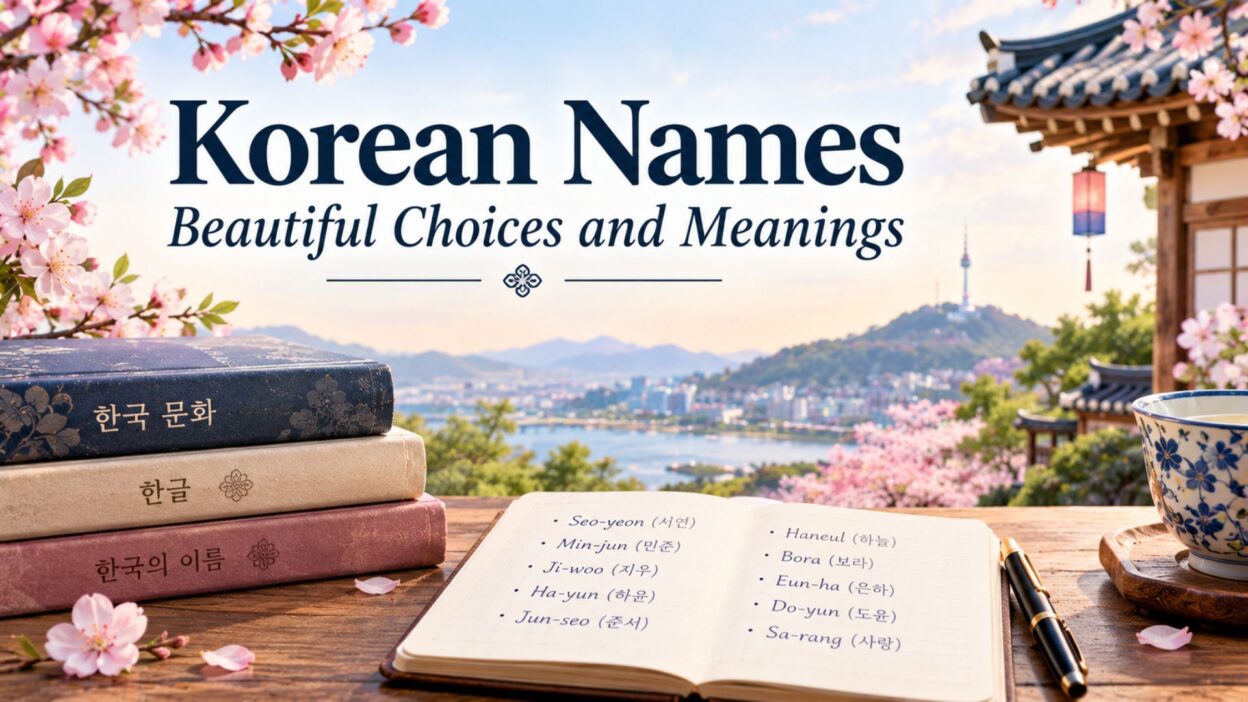
Korean names are admired for their elegant sounds, meaningful syllables, and strong cultural traditions. Many people searching for Korean names want more than a simple list. They also want to understand pronunciation, meanings, name structure, and the cultural background behind each choice.
A traditional Korean full name usually places the family name before the given name. In addition, many given names contain two syllables. Their meanings can vary depending on the Hanja characters chosen, while some modern names come directly from native Korean words.
This guide brings together beautiful Korean names for different styles and purposes. You will find traditionally feminine and masculine choices, flexible unisex options, short names, and names inspired by nature. More importantly, the guide explains how Korean naming works, so you can choose a name with greater care and understanding.
Top Korean Names to Consider
Some names stand out because they have a beautiful sound, a memorable style, or meaningful cultural associations. The following choices offer a balanced starting point for anyone exploring Korean names.
- Seo-yeon (서연) — An elegant name whose meaning can vary according to the Hanja characters selected.
- Min-jun (민준) — A polished choice often associated with positive qualities such as intelligence or talent through different character combinations.
- Ji-woo (지우) — A smooth and versatile name with several possible meanings.
- Ha-yun (하윤) — A modern-sounding choice that can carry different meanings depending on its written characters.
- Jun-seo (준서) — A balanced name that combines two widely used Korean syllables.
- Eun-seo (은서) — A gentle and elegant choice with several possible interpretations.
- Do-yun (도윤) — A strong, modern name with flexible Hanja meanings.
- Seo-yun (서윤) — A soft and refined name that fits many contemporary naming styles.
- Haneul (하늘) — A native Korean word meaning “sky.”
- Woo-jin (우진) — A memorable choice whose meaning depends on the characters used.
Although these names may have commonly suggested meanings, the exact interpretation can change when different Hanja are used. Therefore, it is always helpful to check the specific written form before assigning one fixed meaning.
Traditionally Feminine Korean Names
Traditionally feminine Korean names often feature soft sounds and graceful syllable combinations. However, naming patterns can change over time, and some names may also be used more broadly.
Classic and Elegant Choices
These names have a familiar Korean style and work well for anyone who prefers a traditional or timeless feel.
- Chae-won (채원) — A graceful name with meanings that can vary according to its Hanja.
- Hye-jin (혜진) — A classic combination often connected with positive qualities through different characters.
- Ji-eun (지은) — A familiar name with several possible interpretations.
- Min-ji (민지) — A smooth and widely recognized choice with flexible meanings.
- Seo-hyeon (서현) — A refined name that can be associated with worthy or virtuous qualities.
- So-yeon (소연) — An elegant combination with multiple possible character meanings.
- Su-jin (수진) — A traditional name that may connect with ideas such as excellence or preciousness.
- Ye-won (예원) — A beautiful choice that can relate to art, talent, or other positive ideas.
- Chae-yeong (채영) — A sophisticated name with several possible Hanja combinations.
- Hye-won (혜원) — A gentle name that can carry meanings connected with wisdom or kindness.
Modern Names With a Soft Style
For a fresher feel, modern Korean names often use native Korean words or contemporary syllable combinations.
- Bora (보라) — The Korean word for “purple.”
- Da-som (다솜) — A native Korean word associated with love.
- Ha-rin (하린) — A modern-sounding name with different possible interpretations.
- Na-ri (나리) — A name associated with the lily flower.
- Sa-rang (사랑) — The Korean word for “love.”
- Seul-gi (슬기) — A native Korean word associated with wisdom.
- Ye-rin (예린) — A stylish modern choice with several possible meanings.
- Yuna (유나) — A smooth and internationally familiar name.
- Areum (아름) — A name associated with beauty.
- No-eul (노을) — The Korean word for a beautiful sunset glow.
Traditionally Masculine Korean Names
Traditionally masculine Korean names often combine strong syllables with meanings connected to talent, achievement, virtue, or strength. Still, the exact meaning depends on the Hanja selected for the full name.
Strong and Classic Choices
These names have a traditional feel and remain useful examples of common Korean naming patterns.
- Dong-hyun (동현) — A classic combination with several possible meanings.
- Jae-hyun (재현) — A polished name that may connect with talent, virtue, or worthiness.
- Min-seok (민석) — A strong-sounding choice with flexible character meanings.
- Seong-ho (성호) — A traditional combination whose interpretation depends on the Hanja.
- Seung-hyun (승현) — A name that can combine ideas associated with success and worthiness.
- Tae-hyun (태현) — A familiar choice with several possible meanings.
- Yeong-ho (영호) — A traditional name with different character-based interpretations.
- Dae-seong (대성) — Often associated with greatness or achievement through its written characters.
- Byeong-ho (병호) — A classic name with several possible Hanja combinations.
- Jin-woo (진우) — A balanced name that can carry positive meanings depending on the characters.
Modern Korean Names With a Strong Sound
Contemporary names can feel clean and memorable while still following familiar Korean naming patterns.
- Do-hyun (도현) — A modern choice that may connect with virtue or wisdom.
- Geon-u (건우) — A strong name with several possible interpretations.
- Jun-hyeok (준혁) — A bold combination that can suggest talent and brilliance.
- Jun-u (준우) — A smooth name often linked with positive qualities through Hanja.
- Min-jae (민재) — A stylish choice that may connect with intelligence or talent.
- Si-woo (시우) — A modern name with a simple and memorable sound.
- Tae-jun (태준) — A strong combination associated with positive qualities through different characters.
- Woo-seok (우석) — A solid name with several possible meanings.
- Ye-jun (예준) — A modern choice that can connect with talent or excellence.
- Yun-ho (윤호) — A smooth and confident-sounding name with flexible interpretations.
Unisex Korean Names
Some Korean names can be used by people of different genders. Their usage may also change across generations, families, and naming trends.
For that reason, it is better not to assume a person’s gender from a single Korean syllable alone.
- Ji-min (지민) — A widely recognized name with several possible meanings.
- Ji-su (지수) — A versatile choice that can use different Hanja combinations.
- Ju-won (주원) — A smooth name with several possible interpretations.
- Seo-woo (서우) — A contemporary choice with a gentle sound.
- Su-bin (수빈) — A familiar name used in different naming styles.
- Tae-hui (태희) — A name that can combine ideas associated with greatness and brightness.
- Yu-jin (유진) — A versatile choice with several possible Hanja meanings.
- Ha-neul (하늘) — A beautiful native Korean word meaning “sky.”
- Ji-hu (지후) — A modern name with a clean and balanced sound.
- Min-seo (민서) — A flexible choice that appears in contemporary Korean naming.
Korean Names Inspired by Nature
Native Korean words provide beautiful inspiration for names connected with seasons, the sky, light, and the natural world. As a result, these choices can feel especially poetic and meaningful.
- Bom (봄) — The Korean word for “spring.”
- Eun-ha (은하) — The Korean word for “galaxy.”
- Nabi (나비) — The Korean word for “butterfly.”
- Saet-byeol (샛별) — Associated with the morning star.
- Sora (소라) — A Korean word associated with a seashell.
- Yeo-reum (여름) — The Korean word for “summer.”
- Sol (솔) — Associated with a pine tree.
- Bit-na (빛나) — Connected with the idea of shining or brightness.
- Baram (바람) — The Korean word for “wind.”
- Haet-sal (햇살) — Associated with sunlight.
Nature-inspired names can be especially appealing for fictional characters and creative projects. However, if you plan to use one as a real personal name, checking how naturally it functions in Korean naming culture is a good idea.
Short and Memorable Korean Names
Short Korean names can feel simple, modern, and easy to remember. While two-syllable given names are common, shorter names and single-syllable choices also exist.
- Dan (단) — A short syllable with several possible meanings depending on the Hanja.
- Jun (준) — Often associated with talent or excellence through certain characters.
- Min (민) — A widely used syllable with several possible interpretations.
- Su (수) — A versatile syllable that can represent many different Hanja.
- Yeon (연) — A smooth syllable with multiple possible meanings.
- Yong (용) — A name or syllable that can have different interpretations depending on the character.
- Yu (유) — A concise choice with several possible meanings.
- Jin (진) — A common syllable associated with different positive ideas through Hanja.
- Seon (선) — A short and elegant syllable with several character meanings.
- Rin (린) — A modern-sounding choice often used in contemporary names.
Short names work particularly well when you want a clean and memorable style. Still, pronunciation and cultural context should guide the final choice.
Korean Names With Beautiful Meaning Associations
Korean name meanings deserve careful attention because pronunciation alone does not always tell the whole story. In many traditional names, the selected Hanja determines the exact meaning.
Names Associated With Love and Warmth
These choices connect with ideas such as affection, kindness, beauty, and warmth.
- Da-som (다솜) — Associated with love.
- Sa-rang (사랑) — Means “love.”
- Eun (은) — Can represent kindness, mercy, silver, or other meanings depending on the Hanja.
- Hye (혜) — Often associated with wisdom, benefit, or favor.
- Mi (미) — Commonly connected with beauty through certain Hanja.
Names Connected With Light and Brightness
Light-related meanings can give a name an uplifting and hopeful feeling.
- Gwang (광) — Can be associated with light or brilliance.
- Bit (빛) — The Korean word for “light.”
- Hyeon (현) — A syllable with several possible meanings depending on the character used.
- Yeong (영) — Can connect with ideas such as glory or brightness through different Hanja.
- Hui (희) — Often associated with joy or brightness in certain character combinations.
Names Linked With Positive Qualities
Many traditional Korean names reflect hopes for wisdom, talent, success, or good character.
- Seung (승) — Often associated with victory or success.
- Ye (예) — Can connect with art, courtesy, or talent.
- Seong (성) — A versatile syllable with several possible interpretations.
- Jae (재) — Often associated with talent or ability through certain Hanja.
- Deok (덕) — Commonly associated with virtue.
How Korean Names Work
Understanding Korean naming traditions can make the process of choosing a name easier and more respectful.
The Family Name Usually Comes First
Traditionally, a Korean full name places the family name before the given name.
For example, in Kim Min-jun, Kim is the family name, while Min-jun is the given name. Many Korean family names contain one syllable, although longer surnames also exist.
Given Names Often Have Two Syllables
A large number of Korean given names contain two syllables. Together, those syllables form one personal name rather than a first name and middle name.
Romanization can make the written style look different. For instance, someone may write a name with a hyphen, a space, or as one combined word.
Hangul and Hanja Can Change the Meaning
Hangul is the Korean writing system used to write Korean names. In addition, many traditional names have meanings connected with Hanja.
Different Hanja can share the same Korean pronunciation. Therefore, two people may have names that sound identical while carrying different meanings.
That is why a Romanized spelling should not always receive one fixed translation.
How to Choose a Korean Name Respectfully
A beautiful sound is important, but cultural context matters just as much. Taking a little extra time can help you make a more thoughtful choice.
Check the Meaning Carefully
Do not rely on a single quick translation. Instead, look at the Hangul spelling and, when relevant, the specific Hanja connected with the name.
This step can prevent misunderstandings because identical sounds may have different meanings.
Consider Pronunciation
Some Romanized Korean spellings may look easier than they sound. Therefore, listening to reliable Korean pronunciation can help before making a final choice.
Names such as Eun, Seo, and Hyeon may require practice for people unfamiliar with Korean pronunciation.
Say the Full Name Aloud
A given name may sound different when paired with a family name. For that reason, try saying the complete name several times.
Also, consider how the name sounds in everyday conversation. A beautiful written name should also feel natural when spoken.
Think About Your Purpose
The best name depends partly on how you plan to use it.
A traditional name may suit a realistic character, while a native Korean word may work well for a poetic or creative project. Similarly, a shorter name may be easier to remember for an online profile.
Matching the name to its purpose can make your final choice feel more natural.
Avoid Making Quick Gender Assumptions
Some Korean names can be used by people of different genders. Moreover, naming trends can change over time.
Instead of judging a name from one syllable, consider the complete name and its cultural context.
Frequently Asked Questions
What are some beautiful Korean names?
Beautiful Korean names include Seo-yeon, Min-jun, Ji-woo, Haneul, Bora, Eun-ha, Do-yun, Sa-rang, Jun-seo, and Woo-jin.
What do Korean names usually mean?
Many traditional Korean names receive their meanings from the Hanja chosen for each syllable. Therefore, the same pronunciation can have different meanings depending on the written characters.
Are Korean names usually two syllables?
Many Korean given names contain two syllables, while family names often contain one syllable. However, shorter given names and longer surnames also exist.
Which name comes first in a Korean full name?
Traditionally, the family name comes first, followed by the given name. For example, in Kim Min-jun, Kim is the family name.
Are there Korean names based on native Korean words?
Yes. Native Korean words can inspire personal names. Examples include Haneul, meaning “sky,” Bom, meaning “spring,” and Sa-rang, meaning “love.”
Can the same Korean name have different meanings?
Yes. Different Hanja characters can share the same pronunciation. As a result, names that sound identical may have different meanings.
Are all Korean names gender-specific?
No. Some Korean names can be used by people of different genders, and naming preferences may change across generations.
How should I choose a Korean name?
First, consider the purpose of the name. Then check its Hangul spelling, pronunciation, cultural context, and possible meanings. Finally, choose an option that feels natural and appropriate for how you plan to use it.
Conclusion
Korean names offer a rich combination of beautiful sounds, meaningful traditions, and cultural depth. From classic choices such as Seo-yeon and Min-jun to native Korean names inspired by love, light, and nature, there are many styles to explore.
However, pronunciation alone does not always reveal a name’s full meaning. Therefore, checking the Hangul spelling and cultural context can help you make a more informed choice.
Whether you need a name for a child, a fictional character, or a creative project, take time to choose one that sounds beautiful and feels meaningful for its intended purpose.